Reading Wildwood

photo

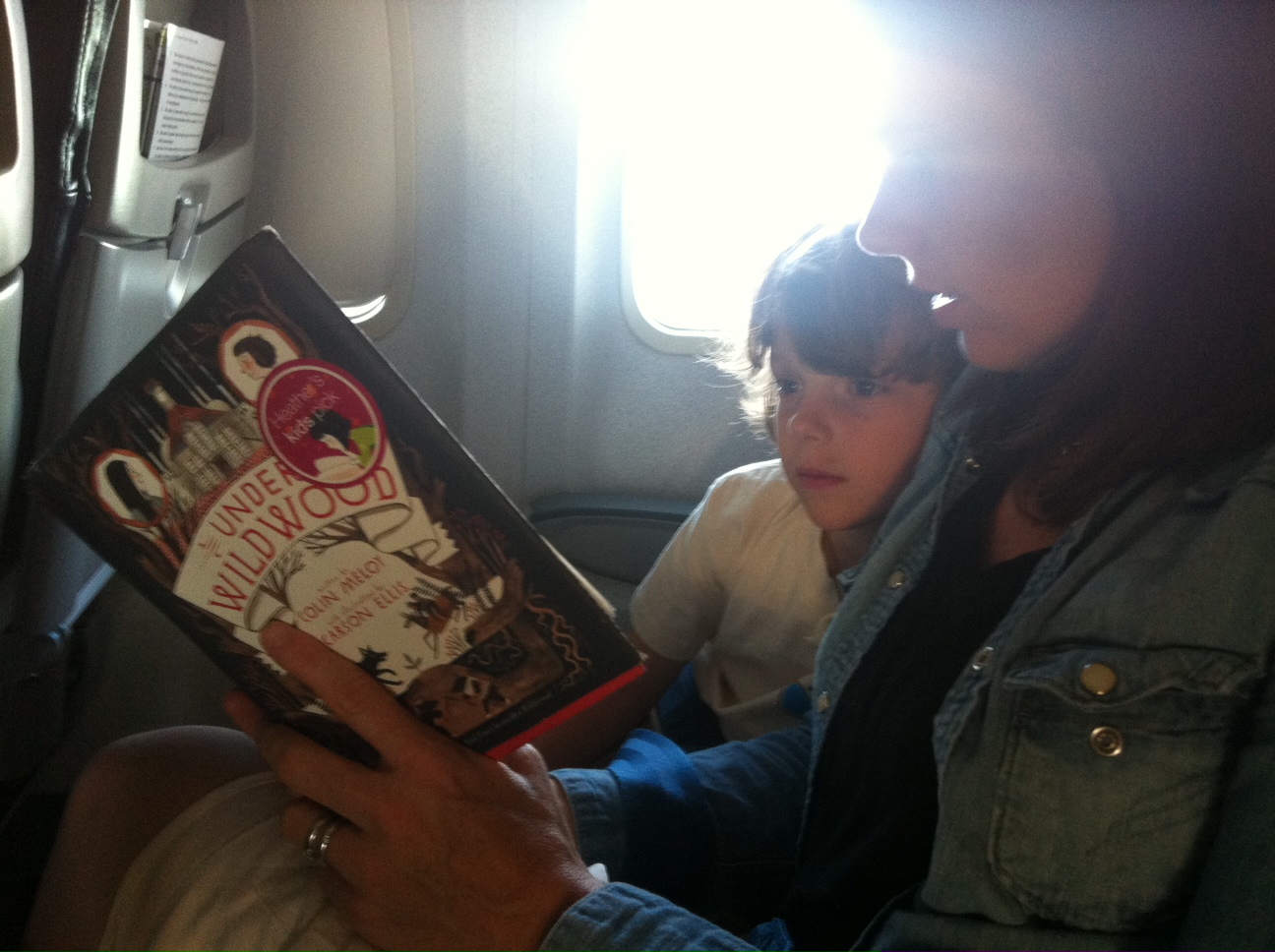
We came across the books at Portland’s World Forestry Centre gift shop, and bought the first instalment later that day at Powell’s. We got several chapters in before I (Nicole here, official bedtime reader) realized that the author, Colin Meloy, is also the lead singer of the Portland-based Decemberists.

So it follows that the series is a Portland love-in (and sometimes parody), but that’s also relatable to any urban environment with vast expanses of wild at its edges. Living in North Vancouver, BC, we have come to see the ‘tree-line’ as the beginning of a precinct stretching to the northern fringes of the earth that’s far beyond our imaginations, and ruled by bears, owls, and all-knowing trees. In Wildwood–and Meloy’s imagination–the bears, owls, and trees speak, battle and become increasingly entangled with the two young, gutsy outsiders who break through into what the everyday Portlanders call ‘the Impassable Wilderness.”

We’ve just finished book two, Under Wildwood, and are now dizzyingly unsure what to read until book three, Wildwood Imperium, is published in February.

A Mount Baker Kind of Afternoon

IMG_6335

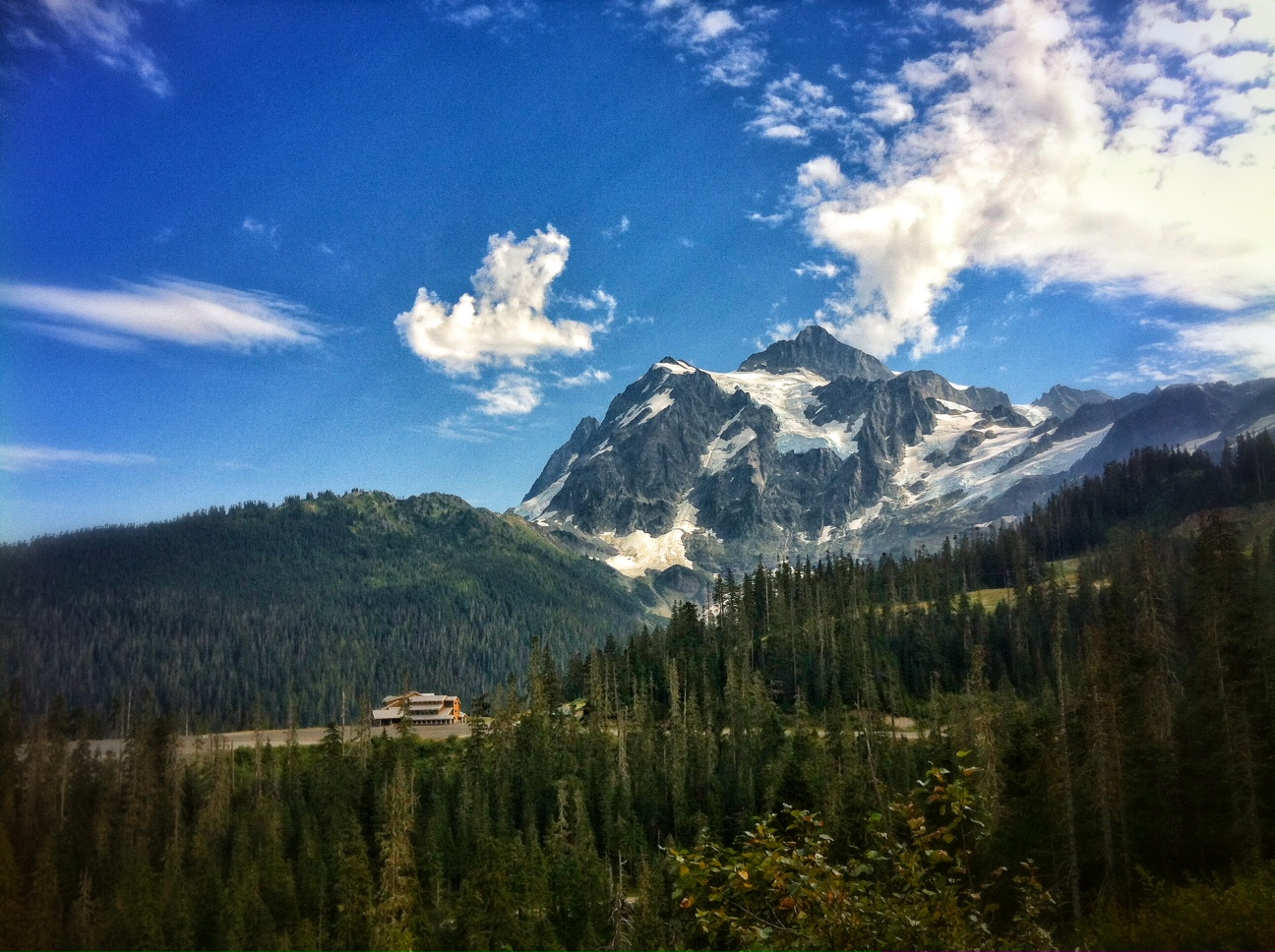
From higher ground in both Victoria and Vancouver, Washington State’s Mount Baker looms large. Well, sometimes. Visibility of this epic dormant volcano is the marker of a clear day in our rainy region.

We’ve been excited about making the trip to Mount Baker this coming ski season, but a day trip recommendation in this month’s Sunset Magazine gave us reason to visit before the frost hits.

Crossing into the U.S. at the Sumas border crossing, we started following the magazine’s recommendations (which are just slightly off, making us wonder the writer actually made the journey, but whatevs), stopping first at Graham’s Restaurant in Glacier. We ordered the scrumptious salmon wrap and salad, fish tacos and polenta cakes, as well as two microbrews. Our bill came to $35 (at which point we discussed going back for lunch every weekend).

The ascent up the mountain through the Mt. Baker-Snoqualmie National Forest lands was simply stunning. The Sunset-recommended Nooksack Falls were mesmerizing for their sheer force, and the nubilous turquoise of the Nooksack River (along with glimpses of the majestic glacier ahead) had us pulling over for more vista breaks along the way.

Even with lunch and rest stops, the trip from Vancouver to the drivable summit at Heather Meadows took under three hours. From there, abundant hiking options beckoned. Sadly, we weren’t equipped for more than a leisurely Sunday drive, but I’m guessing we’ll be back atop Mount Baker before the snow falls.

Vancouver’s American Airport

Canadians living close to the U.S. border have long been targeted by American airports. Plattsburg, NY, even calls itself “Montréal’s American Airport.”

The West Coast is no exception. As the Canadian loonie hovers near parity with the U.S. dollar, the Bellingham, Washington airport (about 30 min. south of the border and an hour from downtown Vancouver) is vying hard for its share of the Canadian market.

For months we’ve seen a ramp-up of ads in transit stations and on Vancouver’s trains and buses for both the airport itself and Allegiant, the low-cost airline that serves about 10 destinations from Bellingham International, including Maui, Honolulu, San Francisco, L.A., San Diego, Vegas and Phoenix.

We recently booked direct Bellingham-Maui flights for under $350 per person on Allegiant Air – a good $200 cheaper than anything out of Vancouver’s airport at the time.

Pulling into the airport’s paid parking lot ($10/day – not bad) less than two hours before our flight, we were struck by the ratio of B.C.-to-any other license plates. It was 10-to-1 easy – what you’d expect to see at, say, a Canucks home game lot.

The airport itself was… regional—a mashup of a bowling alley and legion. In a good way.

After checking our bags we were ushered through security by a TSA agent who reciting Homeland Security regulations like a sermon, happily stopping to answer questions by what he referred to as “our Canadian friends.”

We sped through security through so quickly that we still had time for a meal at Scotty Browns, a U.S. foray by the popular Browns Social House pub chain out of Vancouver. The total for our veggie burgers, sweet potato fries, edamame and pints of locally brewed Mac and Jack’s was less than what we’d pay in our local North Vancouver location – not something you’d expect given the usual mark-up of airport restos.

Walking out onto the tarmac and into the fresh air (instead of a stuffy tube leading to another stuffy tube) was a final affirmation that BLI is our preferred airport from now on. We can only hope that, with renovations currently underway, the experience doesn’t modernize too much. Unless, of course, part of that expansion plan is to install an actual bowling alley in the waiting area.

Hotel Max + Sub Pop Collaboration

Screen Shot 2013-09-03 at 1.57.01 AM

It’s cliche: Aging grunge-lovers making the pilgrimage to Seattle. Checking out the Singles apartments on Capitol Hill, catching shows (that’ll never live up to the old days) at the Moore, driving around looking for Eddie Vedder’s house in West Seattle, imagining Belltown in its gritty needle-infested prime.

We find an excuse to visit the Emerald City every few weeks. Per capita, Seattle has an incommensurate number of fun festivals, “now” restaurants and hip neighborhoods—but for us, the disenfranchised echo of grunge-days-past is still the main draw.

So we were super pumped to learn about Hotel Max’s permanent 5th-floor-wide installation celebrating the recent 25th anniversary of the scene-starting label Sub Pop.

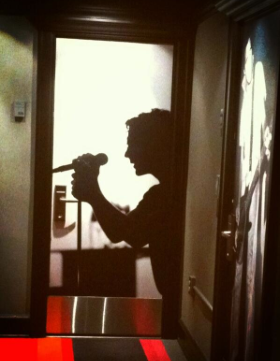
Dramatically lit hotel room doors have been covered with life-size images of Kurt Cobain, Vedder, Courtney Love (grrrrr…), and Chris Cornell baring their souls onstage in early-90s combat boot-wearing, sweat-glistening glory.

But room interiors gently suggest the way forward for all the forlorn souls who’ve come to the source. A six-pack of chilled Loser Pale Ale (another Sub Pop collaboration, with local brewery Elysian) named for Cobain’s favorite T-shirt, eases the pain. Modern, cheerful decor and gleaming bathrooms are a happy reminder that Seattle has, um, evolved. Likewise, turntables adorning bedside tables alongside stacks of more recent Sub Pop discoveries like Iron & Wine, Father John Misty, Fleet Foxes and Wolf Parade convey that there is life beyond grunge, and that Seattle—and Sub Pop—is still a provenance of music with meaning.

Long Live the Meat Draw: A Walk on Victoria, B.C.’s Wild Side

Screen shot 2013-09-19 at 8.01.51 AM

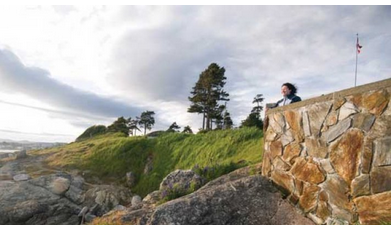
Located a half-hour’s walk from Victoria, the blue-collar Navy township of Esquimalt is rich in nature and friendly faces.

Esquimalt Guide

For the First Nations people who have lived there for centuries, Esquimalt means “place of shoaling waters.” For most locals, it’s long meant “sketchy.” But beyond the bingo hall and pawnshop, two vast and craggy waterfront parks drown out the urban element.

Esquimalt’s vast leisure options are a source of pride to its middle-class residents and the 4,200 naval personnel who work at CFB Esquimalt, the Canadian Navy’s West Coast headquarters.

Things are hopping this month all over the area, starting with the Canadian Naval Centennial from June 9 to 14, when seven navy fleets from the U.S. and the Indo-Pacific region will gather in Esquimalt Harbour as part of the International Fleet Review. Also don’t miss the annual pirate-themed Buccaneer Days from June 11 to 13, with midway rides, live music and fireworks.

Here are our favourite places in Esquimalt:

CFB Esquimalt Naval and Military Museum
Retrace Canada’s naval history and prowess, important figures and impressive ships. Kids love the interactive Oriole Children’s Gallery.

Sunnyside Cafe
This is the neighbourhood’s all-day breakfast go-to spot, tucked under a motorcycle shop and dance studio on the north (and sunny) side of Esquimalt Road. The easygoing menu includes several variations of locally themed eggs Benny, huevos rancheros big enough for two, soups and sandwiches, alongside liberal refills of organic Salt Spring Coffee.

Vietnam Garden
Chef Ken Yu’s predominantly Vietnamese menu—with some Chinese and Thai staples thrown in—is delicious and generous, especially the Pho combos. But what’s truly remarkable about this restaurant is the friendly, genuine atmosphere. Yu and his wife, Shelly, carefully tend to all patrons, including artist Ted Harrison, a regular who inspires Yu’s own displayed paintings.

Saxe Point Park
Split between densely forested, dog-friendly trails and vast manicured lawns with fragrant gardens, Saxe Point Park is a wildly civilized place to spend the early evening as the sun gilds the Olympic Mountains across the Strait of Juan de Fuca.

Macaulay Point Park
Aside from the frequent buzz of float-planes descending into the Victoria Harbour, this clifftop park is a trip back in time. Seascape pathways lead through windswept brush to reveal the former military rampart’s old bunkers and lookouts.

Blue Nile East African Restaurant
Esquimalt is the last place you’d expect to find an East African restaurant, but the mix of interesting flavours and organic ingredients coax people from all over to its tiny strip-mall location. The broad menu features meat, vegetarian and gluten-free selections, Ethiopian coffee and dessert.

Originally appeared in Up! Magazine http://www.upmagazine.com/story/article/esquimalt-guide

Whole Foods Tourism

Screen shot 2013-09-19 at 8.51.54 PM

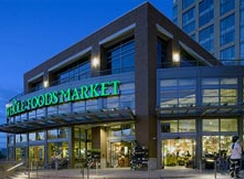
After check-in, there is always Whole Foods. Whether we’re staying at a vacation rental or a hotel, our first stop in any major U.S. city is Whole Foods—to the extent that the stores themselves have become attractions.

Living on the West Coast, we’ve became familiar with stores from San Diego to Vancouver. Spotting celebrities in the Beverly Hills produce section, chilling on the patio in Mill Valley, talking granola with barefoot surfers in Laguna Beach, picking out pinot in Portland’s Pearl District. The stores offer a peek into the lives, livelihoods and ethos of each locale.

Our favourite location, hands-down, is Seattle’s Westlake store. The selection—from wines to toothbrushes—is pretty great, and the in-store café breakfast items, each under $10, are a near-daily ritual. A seafood grill at the back of the store rivals Matt’s at the Market (without the views). But what we like best about the Seattle location is that we get to sleep there. OK, not in the store, but on top of it: Seattle’s Pan Pacific Hotel occupies the upper floors, and staying there is convenient and confining: It’s hard to go—or eat—anything else.

Some people prefer Trader Joe’s. That’s fine. It makes do when we’re in places like Buffalo or Palm Springs. But Whole Foods, with its expansive produce department, lets us eat clean. The unfussy dining environs keep us comfortable eating out with our young son. The inexpensive coffee bars fuel us with vanilla lattes (Nicole) and Americanos (Tom) to sustain our adventures. And free Wi-Fi helps us plan the next leg of our day.

We challenge Expedia and Hotels.com to build in a distance calculator to Whole Foods for each and every property. Certainly nearby vacation rental listings would benefit from announcing their proximity.

We support our local health food stores and farmers markets when we are at home, but when we are away, Whole Foods helps.

Finding Shangri-La in Vancouver

Screen shot 2013-09-19 at 8.55.56 PM

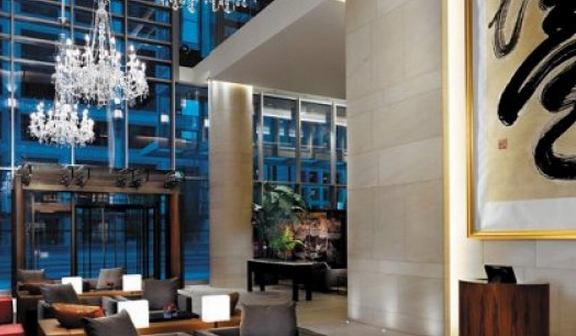
Even amidst the pre-Olympic frenzy of 2009, few openings have generated as much chatter as the five-star hotel chain’s first expansion into North America and its ability to set the bar for other city hotels on the continent. As you check into the Shangri-La Hotel Vancouver, the anticipation crystallizes by what’s not there: namely, street parking in front of the entrance.

Instead, guests are redirected underground, away from the steady hum of West Georgia Street, and into what resembles a parking spa, complete with lightwood lattice, fountains and other Orient-inspired touches from this Hong Kong-based luxury chain.

The game-changer is the charming hostess who leads you up to your room like an old friend, mining you for clues about how to make your stay more enjoyable before you even have to ask. So when the chunky peanut butter cookies arrive for your toddler 10 minutes after check-in (all the paperwork is done in your 450-sq.-ft. room, with the same hostess), don’t be surprised.

Opened just before the 2010 Winter Games as the tallest building in Vancouver at 61 stories (the hotel’s 119 rooms are on the first 15; the top 46 floors are luxury residences), the Shangri-La also quickly moved to compete in the city’s crowded hotel restaurant battle by securing three-star Michelin chef Jean-Georges Vongerichten and his signature restaurant, MARKET.

The weapons of choice are a gourmet two-plate (read: two-meal) weekday lunch with dessert for $28 and plenty of dinner entrées, especially the fresh local seafood specialties, for around $25. There are also four dining options—a café by a fireplace, a raw bar, a heated outdoor terrace with great Vancouver views, and the minimally West Coast fine-dining room designed as if money was no object.

Originally published in up! magazine, WestJet’s in-flight publication.

Mountain Biking North Vancouver

On Vancouver’s verdant North Shore, the once-exclusive world of technical mountain biking is more accessible than ever, thanks to plenty of beginner terrain and bikes that cost as much as a used car.

VIDEO Below, Darren Butler, owner of Endless Biking, explains why you and your family should tickle your adrenalin glands the next time you’re in North Vancouver.

TAKING ON THE hills of Vancouver’s North Shore can be intimidating for mountain bike amateurs, even with a guide like Darren Butler along for the ride. I try to focus on Butler’s instructions as I commit my full-suspension Rocky Mountain Altitude into a descent down a lush tunnel of hemlock and cedar trees in the Seymour Demonstration Forest, above the emerald grid of North Vancouver.

Butler, the owner and guide of North Vancouver outfitter Endless Biking (endlessbiking.com; 604-985-2519), is calmly guiding me through the downhill. His soft, but firm commands like, “let the bike roll through the rough stuff” and, “absorb the bumps with your arms and legs,” carry me over terrain I haven’t attempted since weekends at Ontario’s Niagara Escarpment.

But even Butler’s deft instructions can’t prevent me from colliding with a round boulder that, I’m convinced, will launch me over the handlebars, or at least stop an error-free series of turns that is actually starting to resemble “flow.”

But then an amazing thing happens. My bike somehow absorbs the impact and climbs right over it, instantly responding to my erratic attempts to line it up with the cedar-plank bridge just up ahead. After Butler and I cross it, I ask him if he just saw what happened—that thing where his rental bike turned into a mountain goat.

“Now you see the value of a $5,000 investment in your ride,” he quips back. “It’s another world when you’re riding a sub-30-pound full Fox suspension, Shimano XTR loaded model. As far as I know, you can’t rent bikes like this anywhere else.” Except for here, where you need them most.

This Mecca outfits its pilgrims. Or, rather, Endless Biking’s sponsors do. “We have an agreement with our sponsors that lets people try the goods,” says Kelli Sherbinin, Butler’s partner in business, and in life. “We want you to feel what it’s like to ride what pro riders really ride.” They have the terrain already, so it seems like skimping on the bikes would be treason to humanity’s collective adrenalin gland.

Beyond our three-hour tour through the demonstration forest, lay the twin freaks of Cypress Mountain and Mount Fromme, towering across the Burrard Inlet north of Vancouver. If mountain bike imagery on YouTube, biking DVDs or the covers of magazines has left you gobsmacked, chances are it was shot in the famed North Shore.

The region’s proximity to the big, year-round access, and a vocal scene that dates back to the early 1980s, means an entrenched culture of technical one-upmanship, but also incredible stewardship by athletes of their playground.

“We’ve long known that biking in ecologically sensitive areas can destroy habitat,” says Butler, after we clear a skinny plank bridge. “Bikers are environmental stewards. They don’t want to expedite the problem.”

He speaks about the early days when crafty bikers built over recovering second-growth forests, only to discover conservation gave them carte blanche to add to the terrain—effectively tricking out Mother Nature with skinnies, ladders, teeter-totters and bridges.

“We use the cedar from the fallen forest here to preserve it,” adds Butler. “The cedar wood contains oils resistant to rot, so the work will stand the test of time.”

Of course, this was quickly discouraged back in the day (a.k.a. the mid 1990s) by lawsuit-fearing politicos and freaked-out hikers who objected to sharing their trails with goateed mud monsters on 40-pound metal steeds.

But the mountain bikers won most naysayers over with engineering—most of their woodwork is multiuse—and kindness (Butler greets every hiker we pass with a cheery hello).

As a result, the North Shore has gone legit with more than 100,000 visits annually. Sherbinin is an instructor at Capilano University’s pioneering mountain bike certification programs.

The lore of the North Shore has inspired plank-assisted mountain bike terrain parks from Cleveland to Colombia.

After an afternoon of confidence-building descents and potential face plants averted by advanced two-wheeled technology, I inquire about the price of my very own North Shore-worthy machine. Butler fields the question without hesitation.

“You can have the one you’re riding at the end of the season for a portion of the $5,000 it costs new,” he says, with his light blonde scruff turning upwards into a smile. “But you’ll have to put your name on a waiting list. It’s a common request at the end of a day out here.”